Coverage Planning
Life Insurance for Farmers and Ranchers
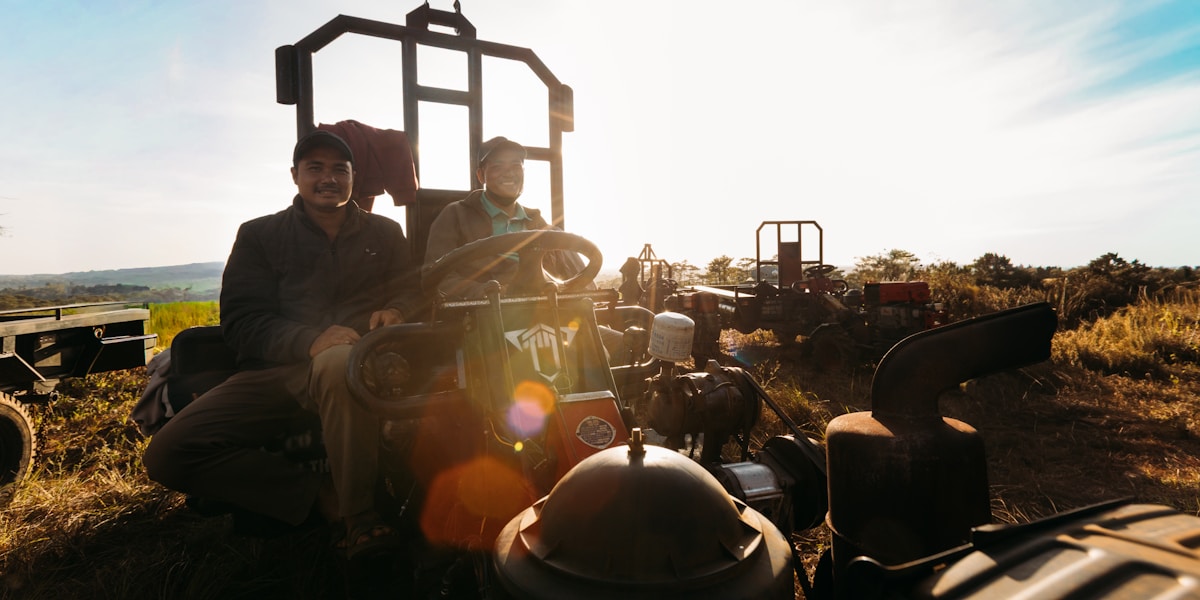
For a farm or ranch family, life insurance often has to do two jobs at once, and that is what makes it different from coverage for someone with a regular paycheck. It has to replace the income and labor the operation would lose, and it has to give the people left behind enough cash to keep the land and equipment together instead of selling off pieces to settle up. On a farm, those two needs are tangled together, because the family’s living and the family’s biggest asset are the same thing. Life insurance for farmers and ranchers is really about protecting both at the same time.
Let us walk through the concerns that make agricultural families a distinct case, and how coverage fits each one.
Why life insurance for farmers is a different kind of question
Most life insurance advice assumes a fairly simple picture: someone earns a salary, and if they pass away, the family needs that income replaced for a stretch of years. Farming breaks that model in a few ways. The income is often seasonal and uneven, tied to harvests, livestock cycles, and prices you do not control. Much of the family’s wealth is locked up in land, machinery, and buildings rather than in a bank account. And the work itself carries real physical risk, from heavy equipment to livestock to long hours.
That combination means a farm family can look wealthy on paper and still be cash-poor in a crisis. If the primary operator passes away, heirs may inherit valuable land and a stack of obligations at the same time, with very little liquid money to bridge the gap. This is the same underlying trap we describe for the self-employed in why the self-employed are so often underinsured: the business and the household are one financial unit, and losing the operator strains both at once.
Replacing income and labor
Start with the everyday reality. If you run the operation, your family does not just lose your earnings if you are gone. They lose your labor, your management, and your knowledge of how the place runs. Some of that can be hired back, but hiring it back costs money the farm may not easily spare, especially in a lean year.
Life insurance can cover that gap. It gives a surviving spouse or the next generation the breathing room to hire help, get through a season, or make a considered decision about the future rather than a forced one. Figuring out how much coverage that takes is the same exercise as for any family, weighing income, debts, and what the household would actually need, which we lay out in how much life insurance do I actually need. The wrinkle for farmers is to account for the value of the unpaid labor and management you provide, not just the cash income the operation reports.
Keeping the operation intact across generations
Farm life insurance earns its keep here in a way a salaried worker rarely faces. Farmland is valuable and hard to divide. When an operator passes away, heirs can be caught between keeping the operation whole and covering debts, expenses, or an equal split among children who are not all involved in the farm. Without cash, the answer is often to sell land or equipment, which can dismantle an operation that took generations to build.
Life insurance provides that cash. A death benefit can settle debts, cover expenses, and give one heir the means to buy out siblings who do not want to farm, all without carving up the acreage. For families thinking about long-term continuity, permanent coverage that does not expire can fit this role well, since the need to pass the operation on does not have an end date. Our whole life insurance page explains how that kind of lasting coverage works. Some families pair a permanent policy for the continuity piece with lower-cost term coverage for the years when debts are highest, getting both jobs done without overpaying.
A few practical points
Farmers and ranchers sometimes assume their occupation makes them hard to insure. In practice, farming is a recognized occupation, and while carriers do consider the physical risks of the work, many are comfortable with it. As with any application, being straightforward about what you do helps you land with a carrier that takes a reasonable view of it.
It also helps to think of the coverage as part of a broader plan. Farm succession often involves wills, business structures, and sometimes attorneys and accountants who know agriculture. Life insurance is the piece that supplies liquidity, the ready cash that makes the rest of the plan workable. It does not replace estate planning, but it is often what keeps a good plan from falling apart for lack of money at the wrong moment.
The whole point is that the next generation inherits the farm, not a forced sale. Sizing that properly means counting the land, the machinery, and the labor you personally put in, not just the income the operation reports on paper. Call us at (888) 840-6183 or start a quote at our quote page.
Ready to see real numbers?
Get a free, no-pressure quote from our licensed team. We work with the top carriers across the country to find the coverage that fits your situation.
Get Your Free Quote